Agentic AI moved beyond pilots for some enterprises in 2025—but most initiatives stalled. This article examines real adoption data, production case studies, and the architectural constraints that determined whether AI agents could scale.
As we approach the end of 2025, agentic AI has crossed an important threshold within the enterprise. While that threshold was not what many executives would have wished—universal, enterprise-wide adoption—it was proof of concept. A small but growing group of organizations successfully moved beyond pilots and experimentation, demonstrating that AI agents can, in fact, operate in real production environments, deliver measurable outcomes, and support core business workflows.
A recent piece published in Fortune analyzes these early agentic AI successes across companies including Capital One, PepsiCo, Salesforce, and JLL. The common thread was not the sophistication of the models themselves, but the amount of operational work required to implement them. Performance improvements emerged only after deliberate decisions about system integration, latency, monitoring, and governance. In practice, agentic AI behaved much like any other enterprise capability: structure begets progress.
Early Production Wins Were Narrow by Design
Capital One’s Chat Concierge illustrates this pattern clearly. The system was designed for a specific customer segment—auto dealerships—and delivered a reported 55% improvement in lead-to-buyer conversion. Achieving that result involved continuous tuning and a proprietary multi-agent workflow optimized for performance. The deployment succeeded in part because it avoided premature generalization.
PepsiCo followed a similar approach by constraining early agentic deployments to defined domains such as software testing and customer service. Salesforce publicly documented its own learning curve after agents initially struggled with response coverage and latency at scale. JLL paired autonomous agents with human oversight, particularly in facilities and property management, to ensure safe execution across operational systems.
Across these examples, restraint was a feature, not a limitation. At Boston SoftDesign, we have been beating this drum all year: AI implementation should be approached as an iterative process rather than an all-encompassing, sweeping deployment.
Why Most Enterprises Remain in Pilot Mode
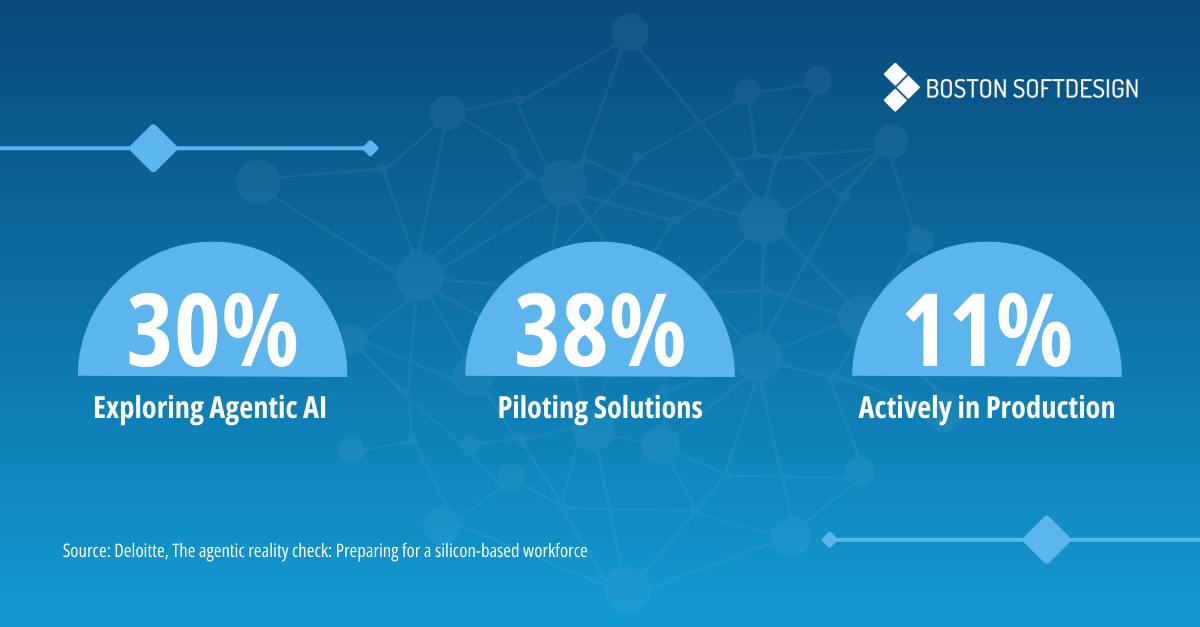
Despite visible progress, broad adoption lagged. Fortune cites Deloitte research showing that, while approximately 30% of organizations explored agentic AI in 2025, only 11% had systems running in production environments.
Even more striking is that, according to Harvard Business Review (and emphasized by Workato at its recent World of Workato roadshow in New York City), 86% of organizations expect their agentic AI investments to increase over the next two years—yet, only 6% trust AI to autonomously handle core business processes. This is a serious imbalance between expectation and reality that must be addressed.
In BSD’s experience, stalled initiatives shared similar characteristics. Teams could build agents, but struggled to operationalize them across systems. Data remained fragmented, permissions were inconsistent, and monitoring and governance mechanisms were bolted on late or not at all. Without answers to these fundamentals, pilots rarely expanded.
Architecture Emerged as the Primary Constraint
Throughout 2025, it became increasingly clear that agentic AI was limited less by model capability than by enterprise architecture. Agents needed reliable access to data, standardized ways to perform tasks and use tools, and safeguards that aligned with organizational policies.
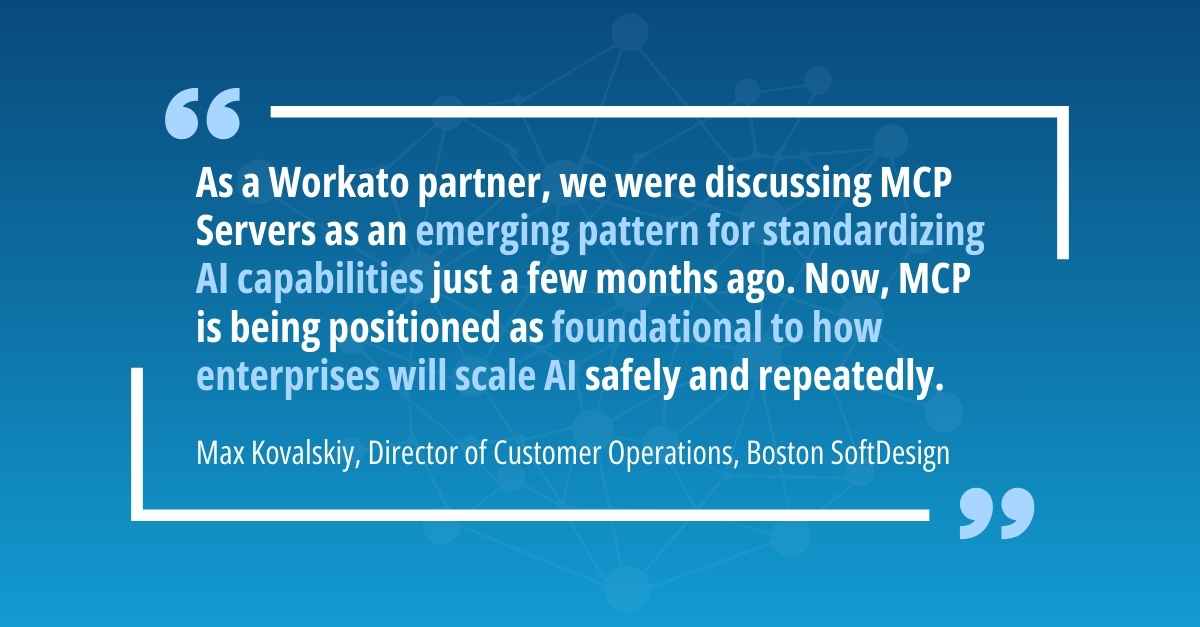
This is where model context protocol (MCP) servers started to gain relevance. Acting as a control layer between AI models and enterprise systems, MCP servers help standardize how agents retrieve context, execute workflows, and interact with tools. More importantly, they make agent behavior observable and governable. Organizations that introduced this kind of intermediary layer were better positioned to scale agentic workloads beyond isolated use cases.
Without a control layer, agents tended to remain confined within single applications. With one, they could participate in cross-functional workflows while remaining aligned with security and compliance requirements.
A Shift Toward Disciplined AI Adoption in 2026
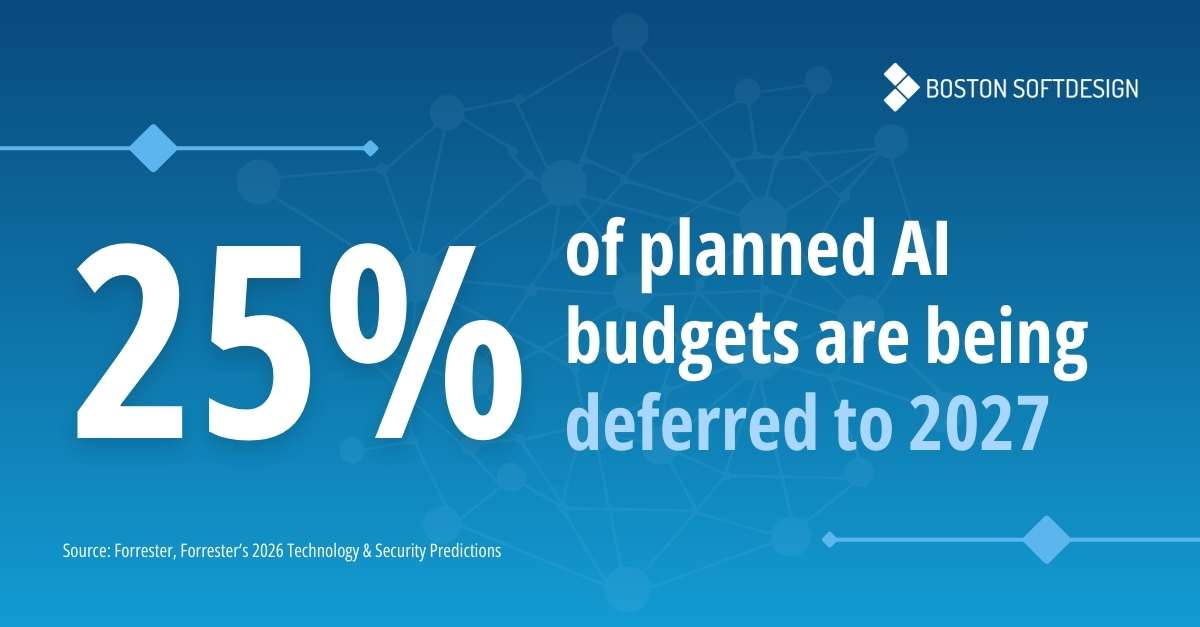
Late-2025 commentary often framed slowing AI investment as a loss of momentum. Data suggests a more nuanced shift. Forrester forecasts that enterprises will defer roughly 25% of planned AI spending into 2027, largely due to early initiatives failing to generate expected returns. The deferrals reflect increased scrutiny rather than diminished interest.
Organizations that emphasized targeted automation, system integration, and measurable outcomes fared better than those pursuing broad deployments without operational foundations. Fortune’s reporting supports this view: progress correlated with disciplined execution rather than scale alone.
The year made one point unmistakable: Agentic AI introduces operational demands that resemble other enterprise platforms more than consumer-facing AI tools. Ownership models, governance frameworks, integration strategies, and monitoring practices directly influenced outcomes.
Enterprises that accounted for these requirements early moved forward. Others paused, reassessed, or shut down pilots entirely.
Looking Ahead
Agentic AI enters 2026 with clearer boundaries and more realistic expectations. It has demonstrated value in constrained environments supported by strong architecture and governance. Scaling beyond those environments will depend on the same principles that govern enterprise IT more broadly.
At BSD, this perspective has shaped our work throughout the year. Moving from pilots to production requires treating AI agents as part of the system, not exceptions to it.
The organizations that succeed next will be the ones that build accordingly.